Foreword: AMOLED, I believe we do not think the word has been getting
strange. In the fierce competition in this screen, AMOLED in the end is
how to make their own highlights? It is to the advantage of how to
attract the public eye it? How it meets the needs of everyone? It is
what defects have waited more sophisticated processes to improve it? The
topic will be announced all these puzzles.
AMOLED (active matrix organic light-emitting diodes, or active-matrix
organic light-emitting diodes, English: Active-matrix organic
light-emitting diode), the television and mobile devices in a display
technology is applied. Where the OLED (organic light-emitting diode)
describes the film show the specific type of technology - organic
light-emitting display, AM (active matrix or active matrix body body)
refers to the technology behind the pixel addressing.
AMOLED display stored beforehand or integrated in the TFT
matrix OLED light emitted after the electric shock by molecule, as a
switch to control the current flow to the flow of each pixel. Typically,
each pixel consists of two at least the continuous current control TFT.
One control charging the storage capacitor, the other to provide a
certain level of the voltage source, used to create a constant current
pixel and the required runtime passive OLEM high currents cancel out.
TFT backplane technology is the key to manufacturing AMOLED display.
Today, two major TFT backplane technology, i.e., polycrystalline silicon
and amorphous silicon, has been applied to the AMOLED. These techniques
for low temperature (less than 150 ° C) under the production of
flexible AMOLED displays on flexible plastic substrates may be provided.
Advantages and disadvantages of AMOLED screen
Benefits:
1. Compared to traditional LCD, AMOLED screen is very thin, and can be
integrated touch screen layer, ultrathin machine advantage.
2.AMOLED self-luminous, black nowadays do not work for a single pixel in the display, display dark low power consumption.
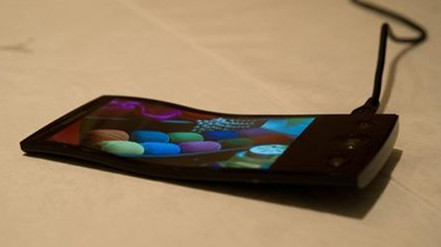
3.AMOLED can be made flexible screen, compared to the LCD screen glass substrates should not be damaged.
4.AMOLED and SUPER AMOLED very wide color gamut, can reach 110% NTSC.
Some on the LCD can not accurately restore the color, can be expressed
in the AMOLED. For example, canola flower in full bloom, to have
feelings too Wuyuan, in the ordinary LCD is not showing up, because
beyond the color gamut of the display. Sharp's high-end LCD screen in
order to solve this problem, specifically to increase the expression of
the yellow sub-pixel to bright yellow.
5.AMOLED with high contrast, contrast can be theoretically infinite, but not leaked.
6.AMOLED has a fast response speed, response time is only LCD 1/1000 to 1/100.
7.AMOLED compared to passive OLED has a higher refresh rate, energy consumption is also significantly reduced.
Cons:
1.AMOLED immature technology, high score screen they use pentile, with
this arrangement, the nominal resolution of less than 70%, it would be
more grainy heavy at lower dpi, and a close look at (especially myopia
night watch) you can clearly see the color point, light-emitting display
needs assistance when adjacent pixels, text edge virtual hair. Strictly
speaking, this is not a disadvantage of the AMOLED, LCD because there
is also pentile arranged, and there is also a standard RGB AMOLED
arrangement. But AMOLED technology difficult, with pentile is yield and
lifetime of compromise. The current high score screen, this shortcoming
has been very noticeable.
2.AMOLED drive circuit immature Levels over uneven and difficult to control low-light area
3.AMOLED because it is self-luminous, so the aging process of aging may
appear different pixel brightness level is not the same as cause is not
the same, it may lead to the display left blur. The blue sub-pixel color
temperature drift decreases rapidly also lead to problems. The
luminescent backlight LCD screen does not have this concern.
4.AMOLED Internet more costly electricity. Pages are mostly white
background, the current consumption when the AMOLED LCD display is
larger than white!
5.AMOLED too bright, because of the high AMOLED color gamut, but most of
the current display content based on low-gamut display s-RGB standard
equipment production, suitable for ordinary LCD display on. This is
actually not a drawback, high color gamut can tune into low gamut, such
as Samsung mobile phones have several color modes adjustable.
6. Compared with liquid crystal displays, in direct sunlight, AMOLED monitor may be difficult to see. Cast serious.
The organic materials used in the display 7.AMOLED easily degraded.
However, it has developed a material degradation compensation
technology.
8.AMOLED displayed on the same screen for too long can cause the screen Screen burn-in.
9.AMOLED large cost is particularly high yield is particularly low.